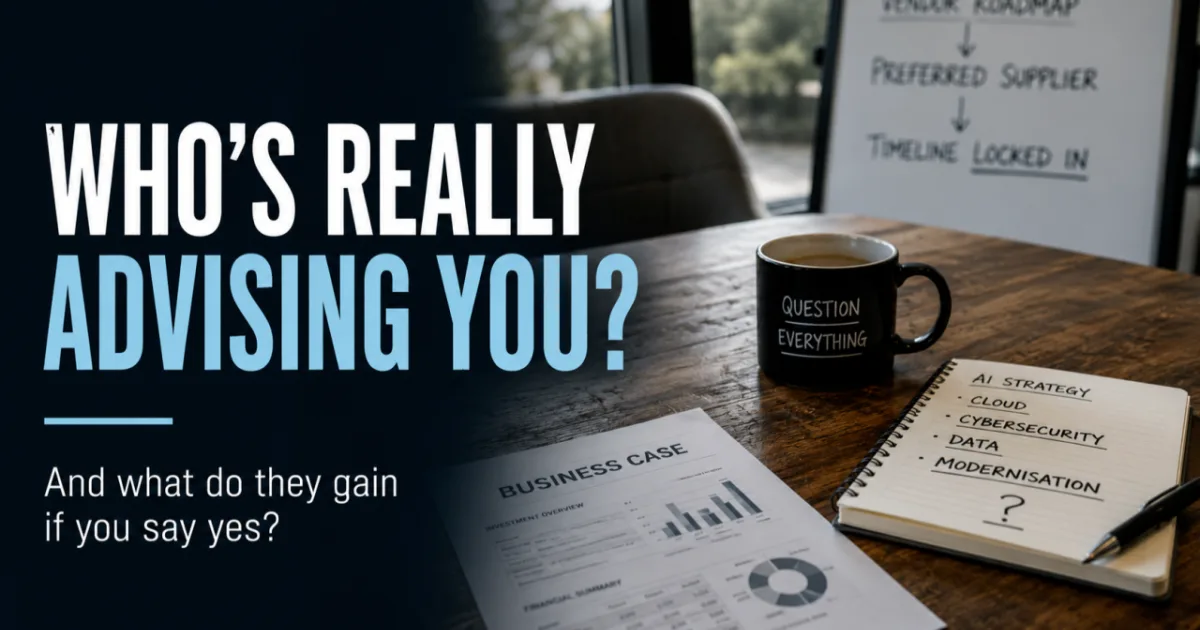
Read more about Who's Really Advising You?
And what do they gain if you say yes?
And what do they gain if you say yes?

Often it is the unarchitected backbone of organisational civilisation
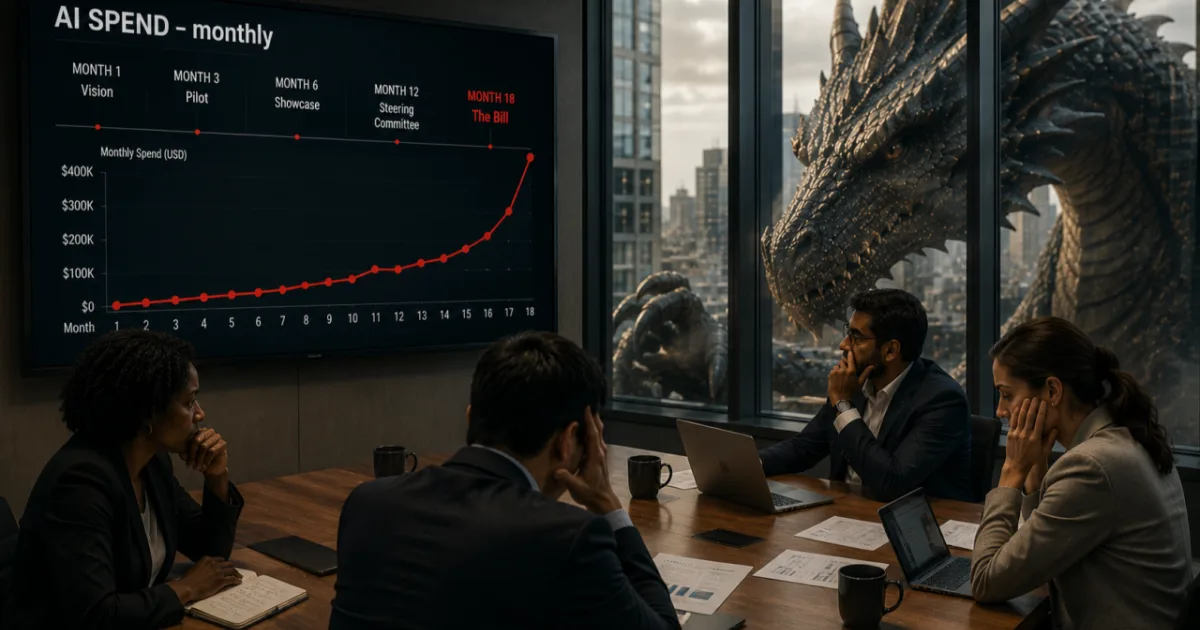
The tragedy of AI is that nobody set out to overspend.
Thanks to our friends at Conventus

The re-org is the corporate equivalent of moving the furniture when you can't afford a new house.
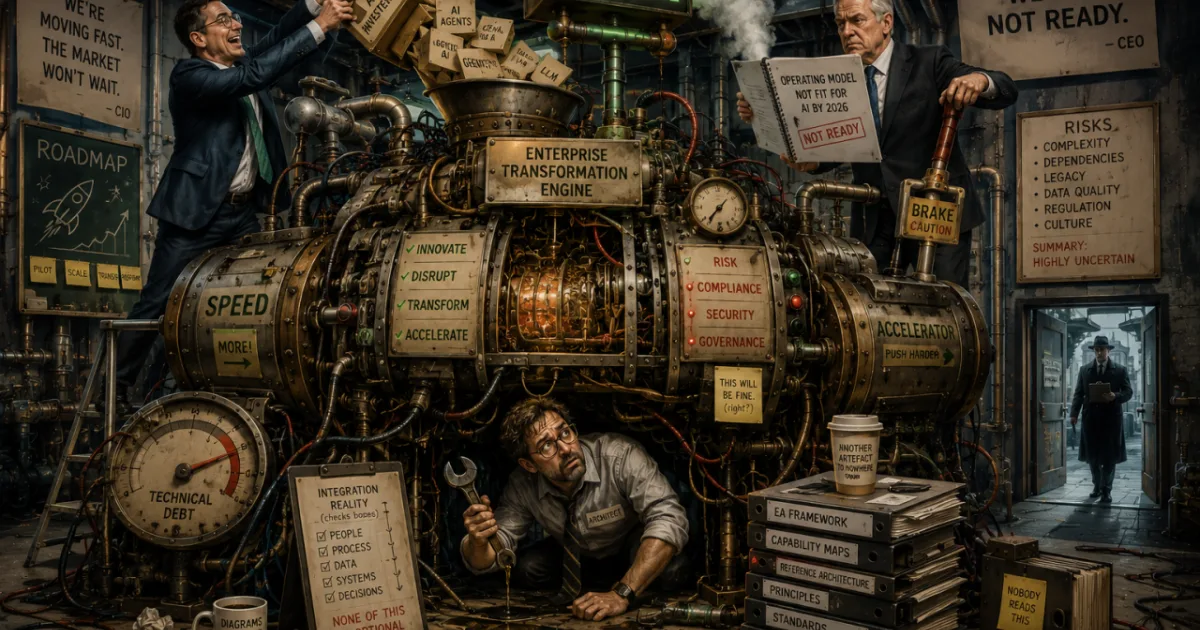
One Says No. The Other Says Yes. The Architect Glues it All Together?
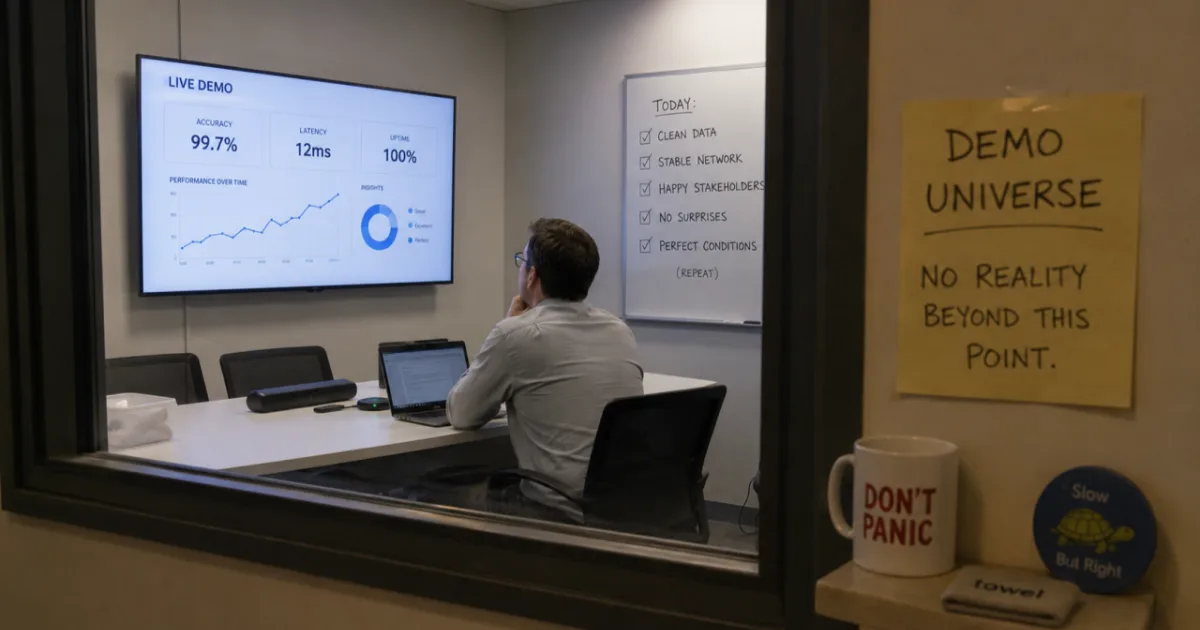
A demo is a magic trick performed in a sealed room, by a magician, using a deck the magician brought.

By March, generative AI had eaten two of the swim lanes. By June, a regulator had eaten a third.
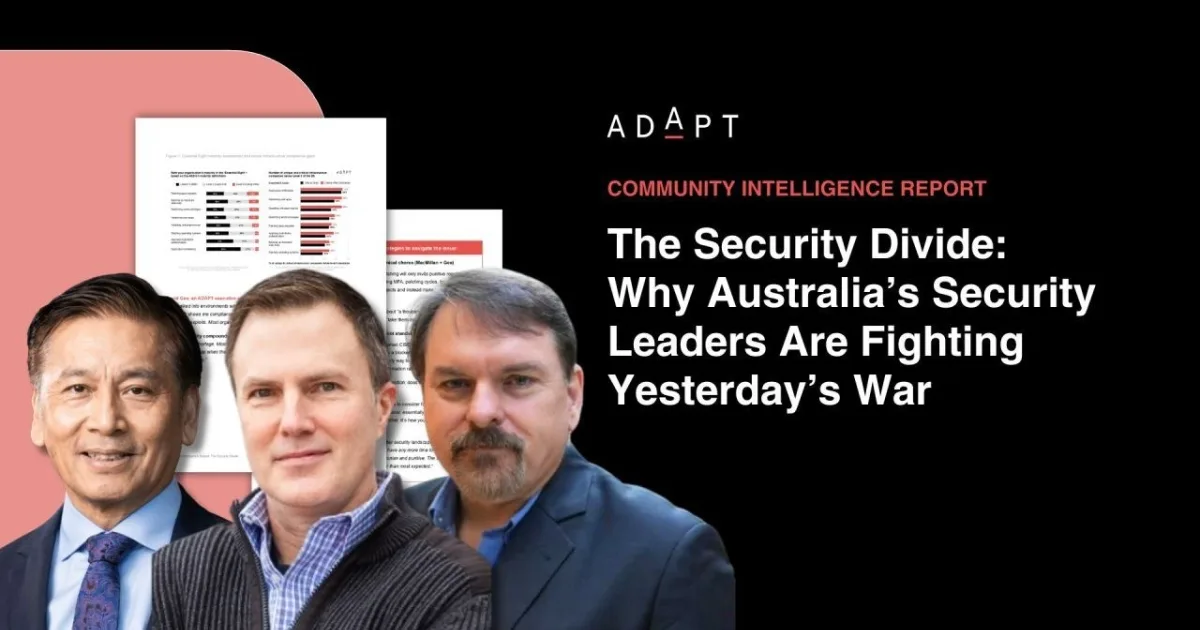
Why Australia's Security Leaders Are Fighting Yesterday's War

Turning Strategy Into Something You Can Actually Execute.

The Gap Between Strategy and Execution Isn't a Culture Problem. It's an Architecture Problem.

Research on Enterprise Architecture capability confirms what we see in practice: when aligned with the firm’s objectives and business model, EA can leverage organisational agility, enabling changes through innovation or operational adjustments.
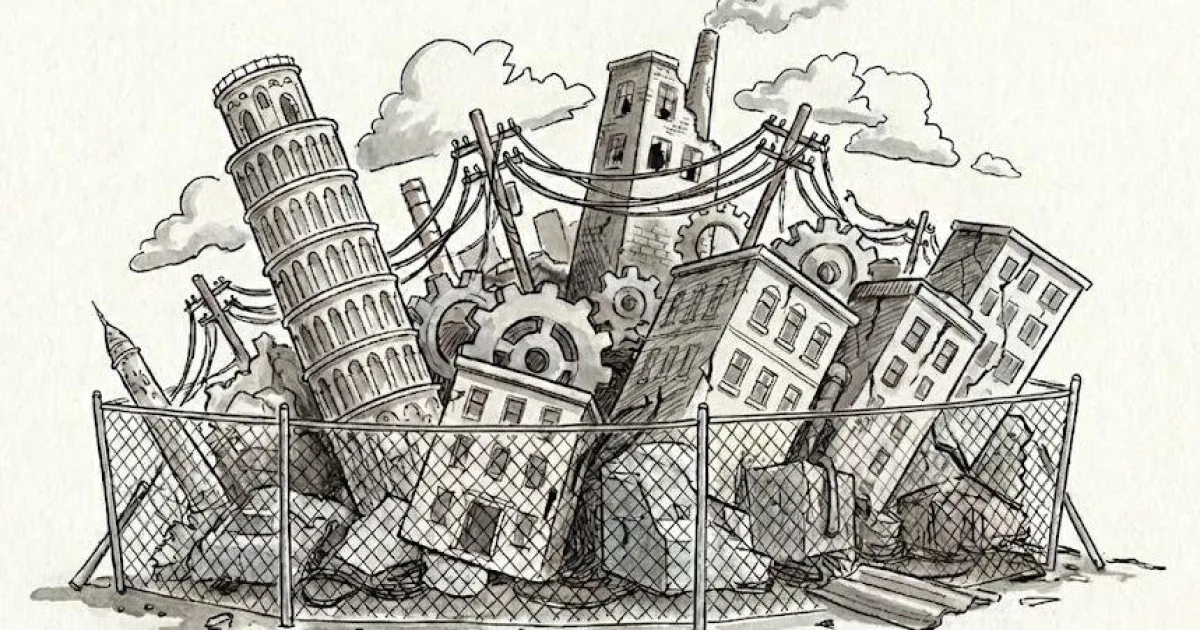
Most enterprises aren’t suffering from speed. They’re suffering from drift. Layer upon layer of well-intentioned decisions, no architectural intent, and complexity hardens into foundations no one meant to build.
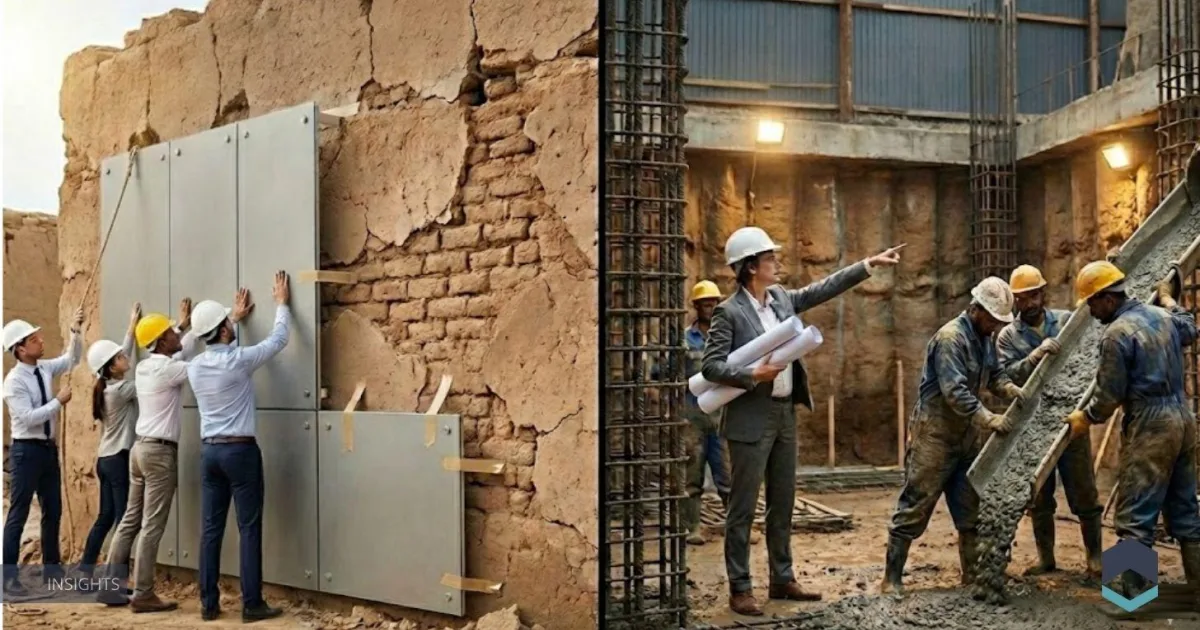
In 2026, the challenge is no longer can we build AI? It’s can we integrate it into the business? This article explores why Business Capability Models are becoming the foundation for turning AI pilots into governed, scalable enterprise value.
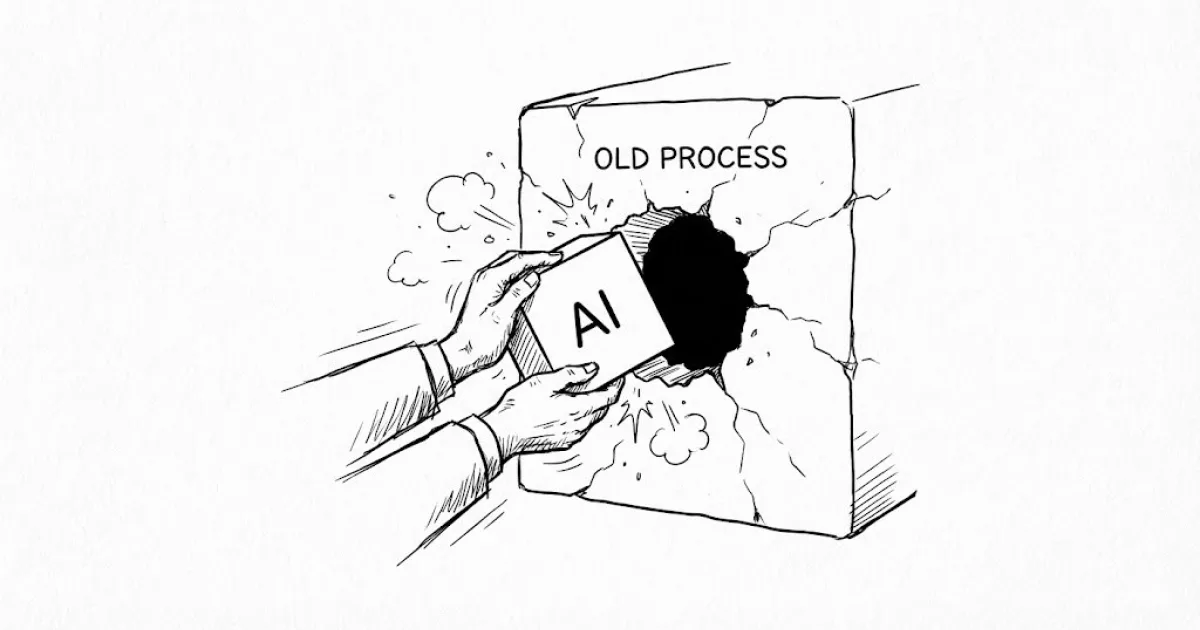
People, process, security and data matter just as much as tech in the AI journey. Without them being aligned to a shared POV, experimentation stays isolated, governance becomes reactive, and expected ROI never materialises.

People don’t stall because they resist change. They stall because the path forward is unclear. This article uses a city metaphor to examine how confusion quietly undermines momentum.
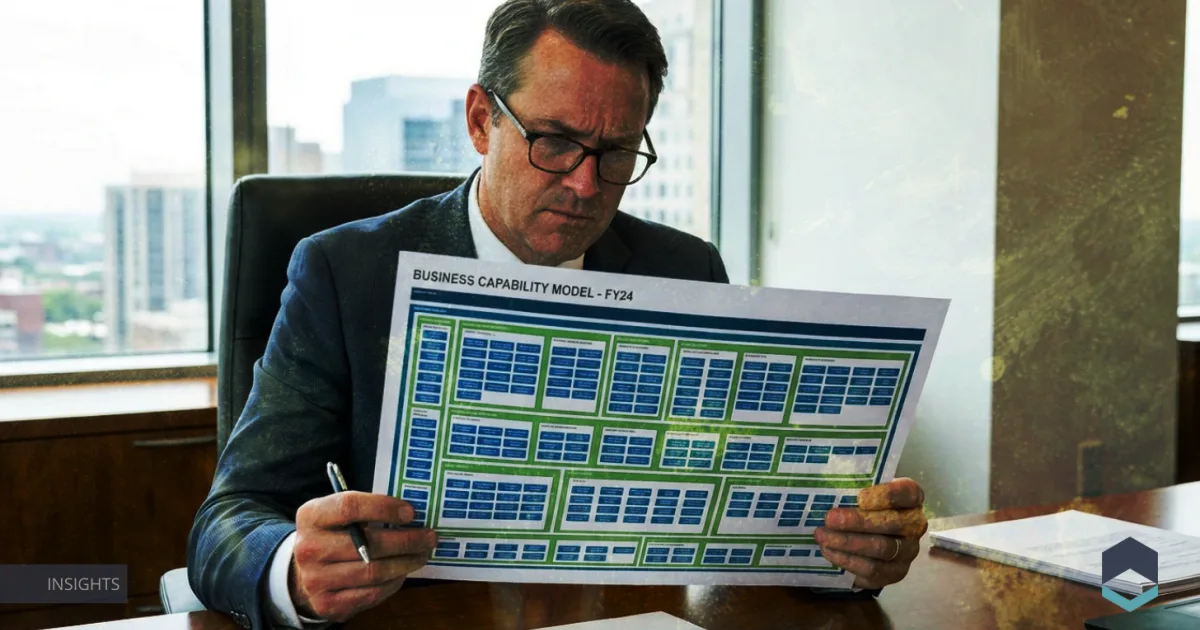
As cost pressures persist, CFOs are looking beyond traditional financial views. This article explores why business capability models are helping explain cost behaviour, duplication, and investment trade-offs more clearly.
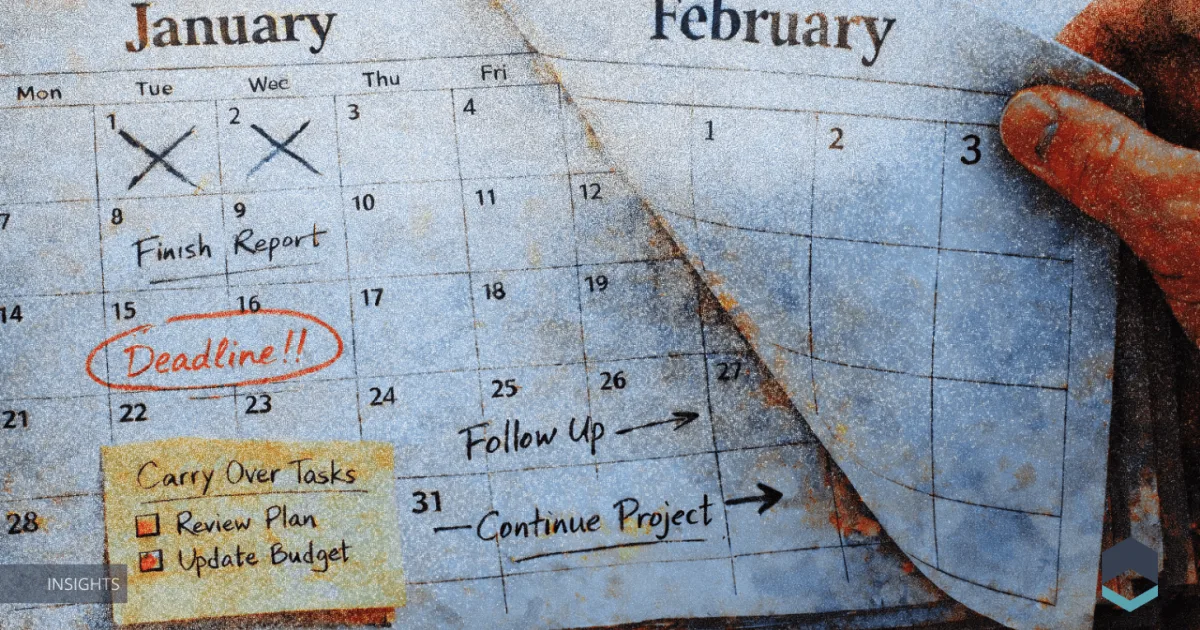
The most important work this year may not be new. In many organisations, progress is limited less by ideas and more by unfinished decisions. This article explores why follow-through often matters more than starting something new.

Mental fatigue is the quiet crisis shaping work today. Constant switching and digital noise drain clarity, leaving teams tired before the real work begins. Protecting cognitive energy is now a strategic advantage.
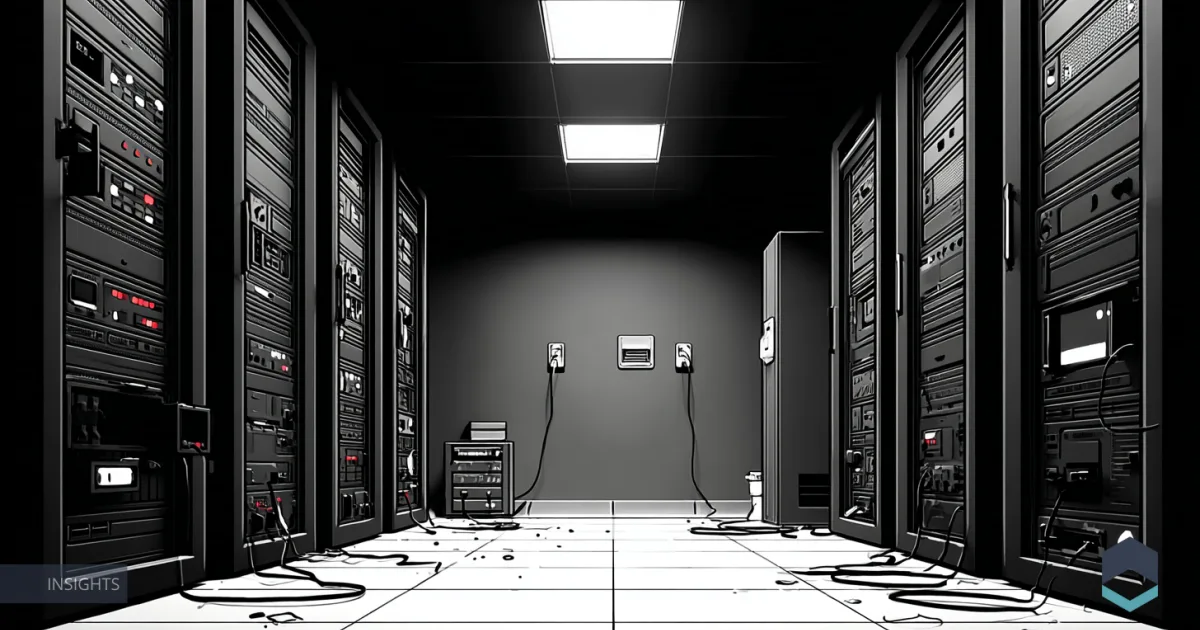
Organisations keep buying new systems hoping they’ll magically fix deeper problems, but technology can’t replace clarity, capability or good decision-making. Without architectural foundations, even the best software becomes an expensive ornament.

Real architecture isn’t the diagrams you see, it’s the clarity created long before problems emerge. This article explores why early, invisible architectural work saves organisations millions and enables strategy to move at pace.

The strongest organisations don’t choose between cutting costs and building capability, they balance both. Clear architecture helps leaders trim smartly and invest where it actually matters.

Most AI delivery challenges aren’t technical, they’re organisational. When data, process and governance are ready, implementation becomes far easier.

They call it architecture, but it’s really time travel. Explore how enterprise architects quietly reshape the future, fixing problems before they exist and ensuring the systems we build today still make sense tomorrow.

Can architecture and AI ever get along? In this Insight Factory podcast, Glenn Smyth explores how principles-based governance turns tension into trust, helping data teams innovate faster, safely, and in sync with strategy.

If your transformation is stuck, it’s not the method, it’s the decision architecture. Fund capabilities, publish decision rights, kill more things, and measure decision lead time + risk burn-down. Boring governance beats brilliant theatre.

True resilience isn’t built in crisis, it’s shaped in quiet moments of gratitude, empathy, and mindfulness, the habits that help people stay grounded, connected, and performing at their best.

Operating models fail when they’re built on structure instead of capability, lasting alignment starts with clarity on what the business must do.

While many boards are buried in delivery updates and disconnected metrics, architecture provides the visibility, independence, and foresight needed to connect strategic intent with long-term impact.

Solution Architecture aligns technology with business goals and creates scalable, reusable blueprints. Solution Design delivers the technical detail. Together, they ensure today’s solutions fit seamlessly into tomorrow’s vision.

Together, EA and BCM support strategic alignment, roadmap development, change management, and stakeholder communication, facilitating a seamless integration process and helping organisations realise the benefits of M&A.

Artificial Intelligence (AI) is transforming the way businesses operate, offering new efficiencies, insights, and decision-making capabilities.

Traditional enterprise architecture (EA) approaches, whilst excellent for mapping out intricate systems and processes, often struggle to address the human element of technology adoption and use.

While many organisations struggle with fragmented pilots, skill gaps, and cultural resistance, architecture provides the clarity, alignment, and structure needed to turn isolated efforts into lasting impact.

Far from rendering their role obsolete, the low-code/no-code revolution is transforming the responsibilities and focus of enterprise architects in several key ways.