Posted on
"Move fast and break things" was a great slogan.
Until we realised we were the ones who had to fix the things.
We didn't all "Move Fast and Break Things." either.
Some of us moved slow and broke them anyway.
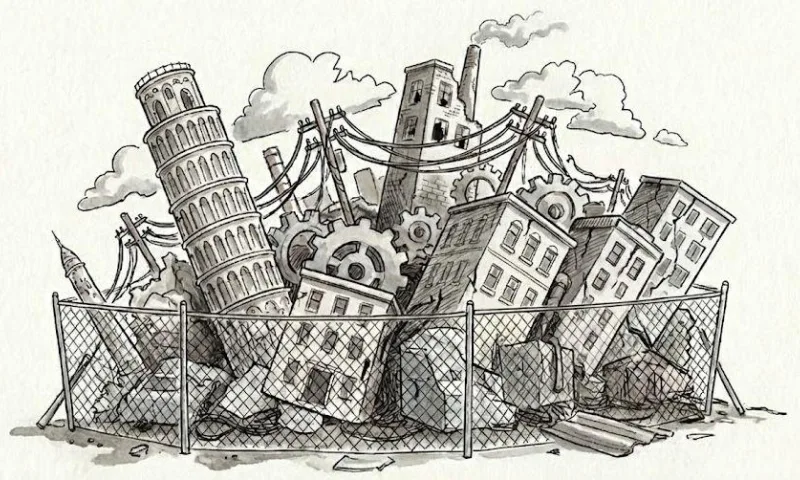
There’s a myth that "spaghetti architecture" many enterprises are dealing with comes from moving too fast, from that Silicon Valley ethos of breaking things to get to market.
But we look at a lot of client landscapes. And frankly? Some of the biggest tangles we see are in organisations that have been risk-averse, steady, and cautious for 20 years.
They didn’t have a "speed" problem.
They had an "Accidental Architecture" problem.
No one woke up and decided to build chaos. But here's what happens when you build without architectural intent:
- 3 CRMs because each department made its own "best choice"
- Data silos that require archaeological expeditions to navigate
- "Temporary" workarounds from 2008 that are now load-bearing infrastructure
- Integration spaghetti that makes every change a 6-month project
Some have been treating architecture like construction when we should be treating it like town planning.
A number of our team have worked in these environments, including in Silicon Valley during the golden era of "Move Fast." We worked through the boom, the bust, and the wild energy of it all. It was intoxicating. But our architecture thinking, and yes, our Aussie grounding always kept a little pragmatic voice in the back of our heads:
"It’s all well and good to disrupt the industry, mate, but if the billing system falls over, nobody gets paid, if the supply chain breaks, no one gets their goods."
That unique blend, ambition mixed with dry Aussie realism, taught us a valuable lesson:
Chaos doesn't care about your speed.
The Fix?
We've spoken about it before...
Town Planning.
You don't need to be a bureaucratic roadblock. You just need Zoning.
- Define the residential zones (Core Systems).
- Define the industrial zones (Data/AI).
- Map the roads (Integration).
Once the zones are clear, your teams can move as fast (or as cautious) as they like inside them.
This interview covers the origins of the Fragile to Agile mindset, including how our founder's experience shaped the "Town Planning" philosophy that balances speed with stability.
https://www.youtube.com/watch?v=KKy5q4z7f8M